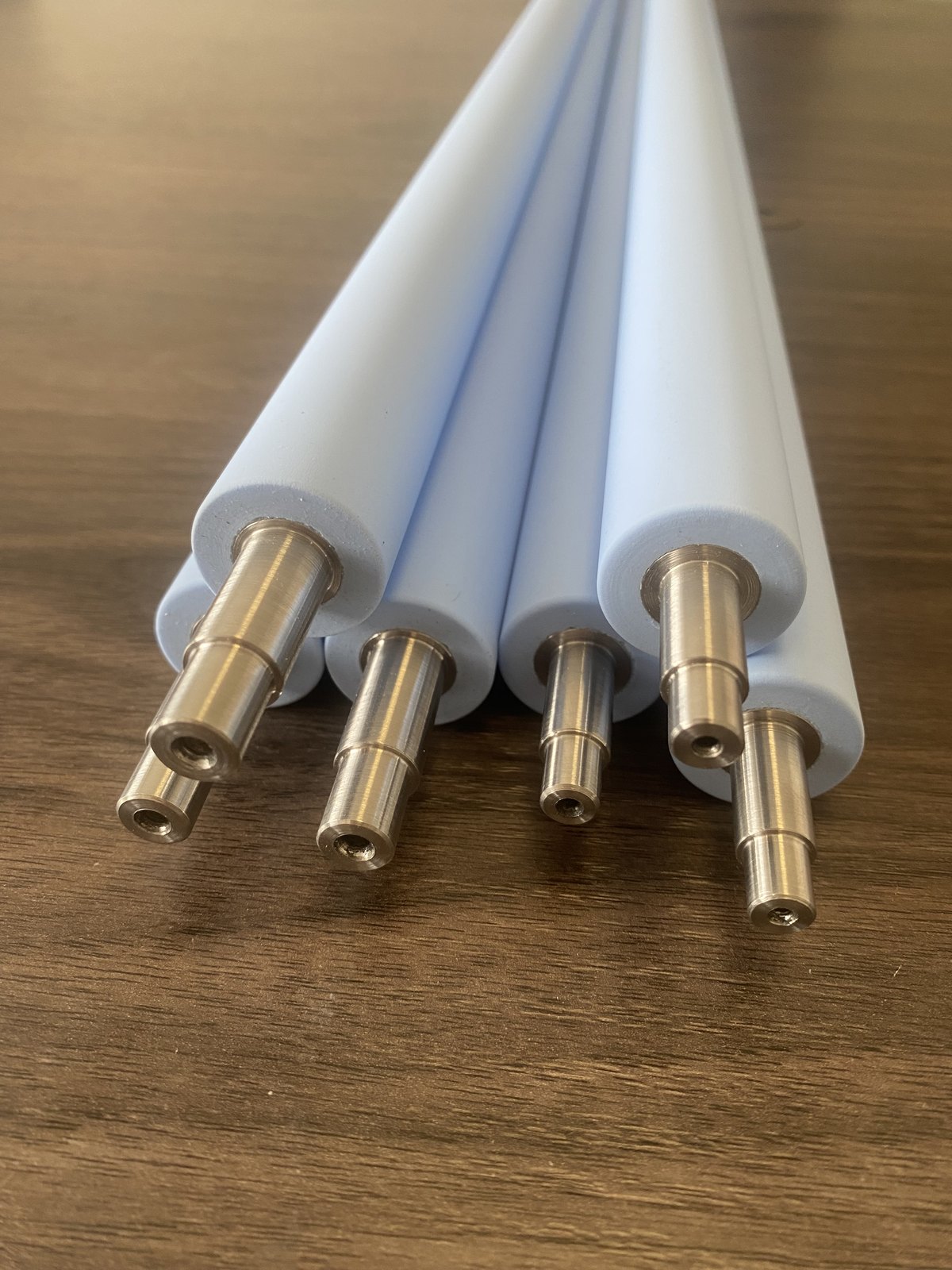
Anti-Stick Anti-Static Silicone Rollers
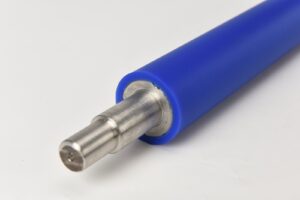
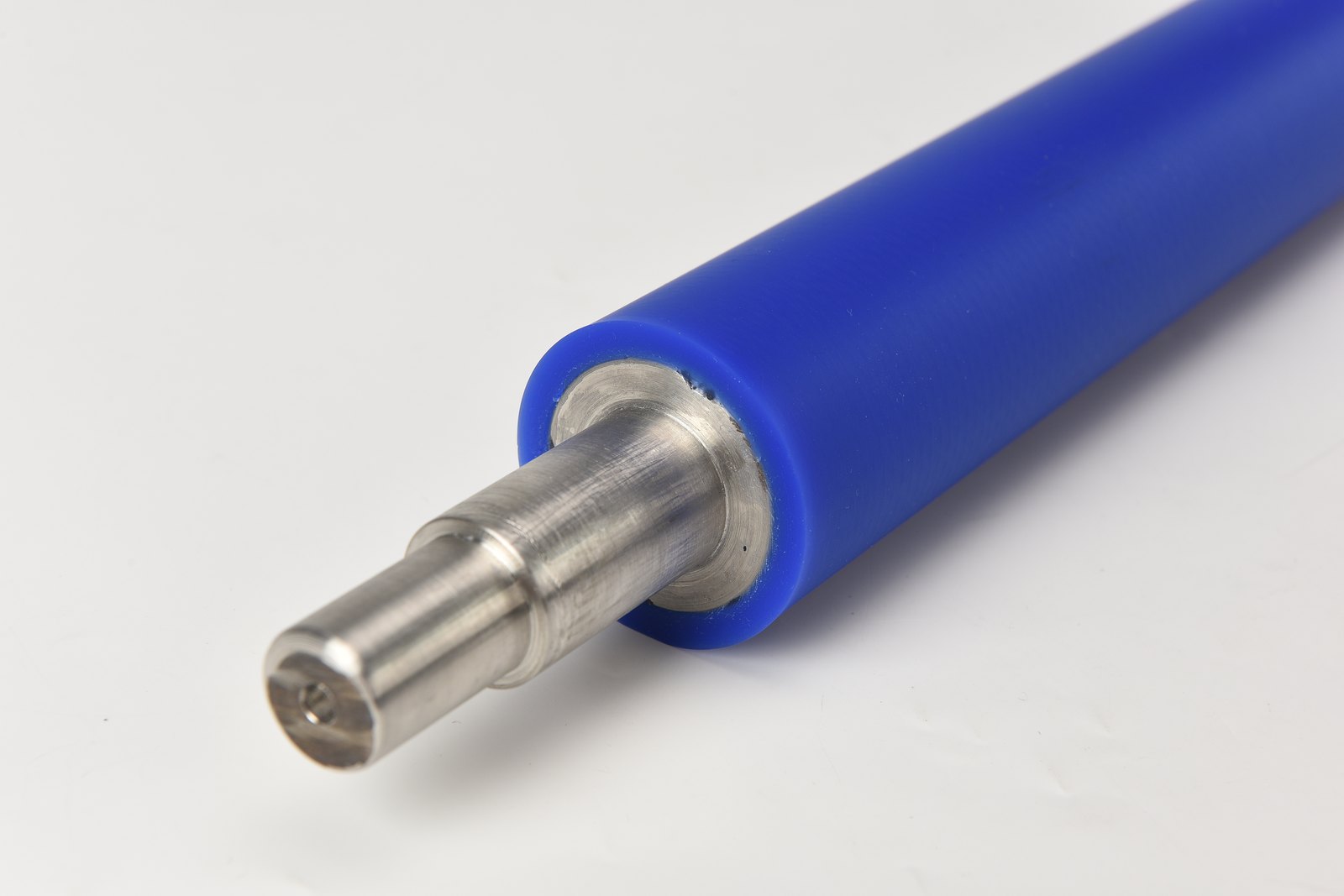
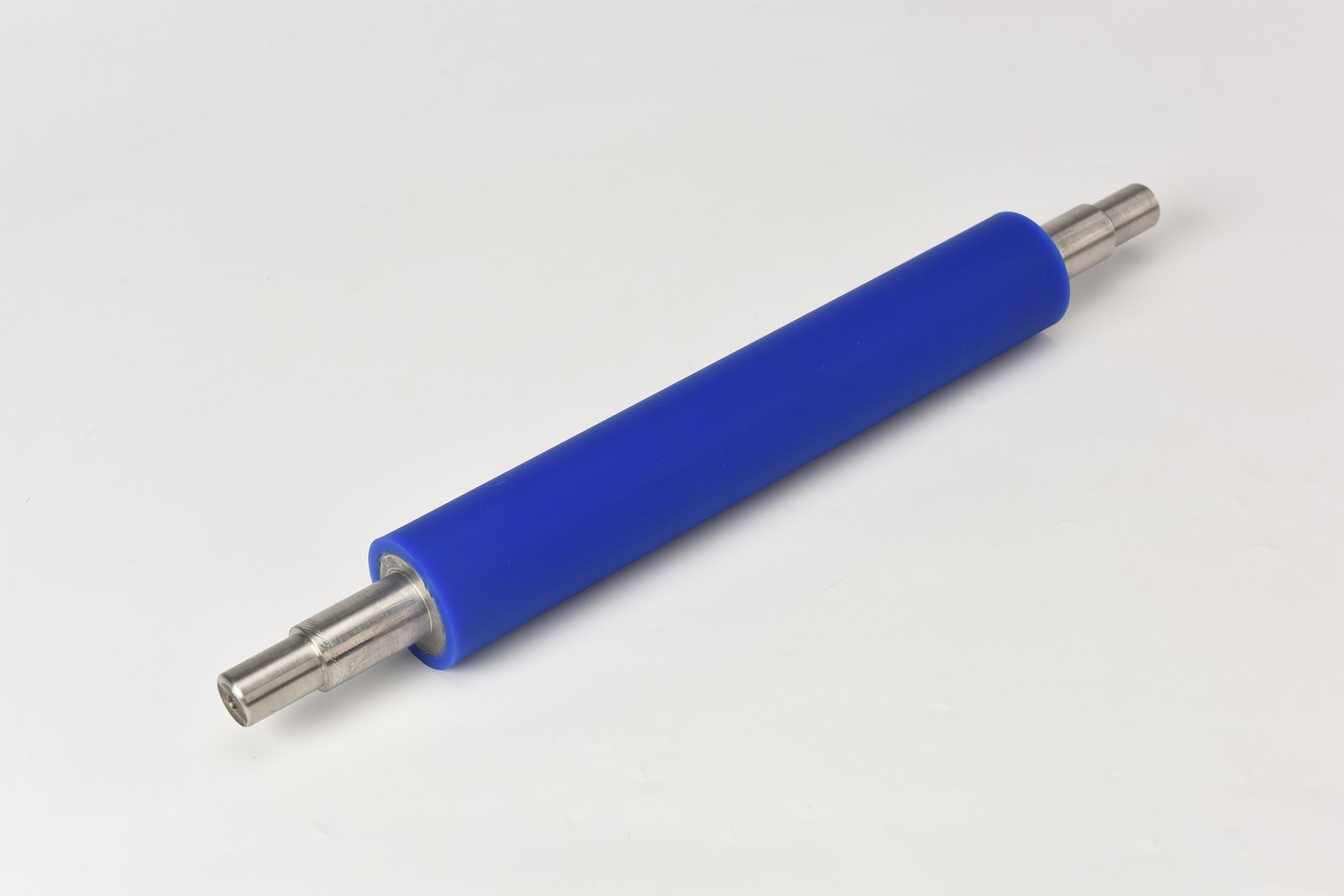
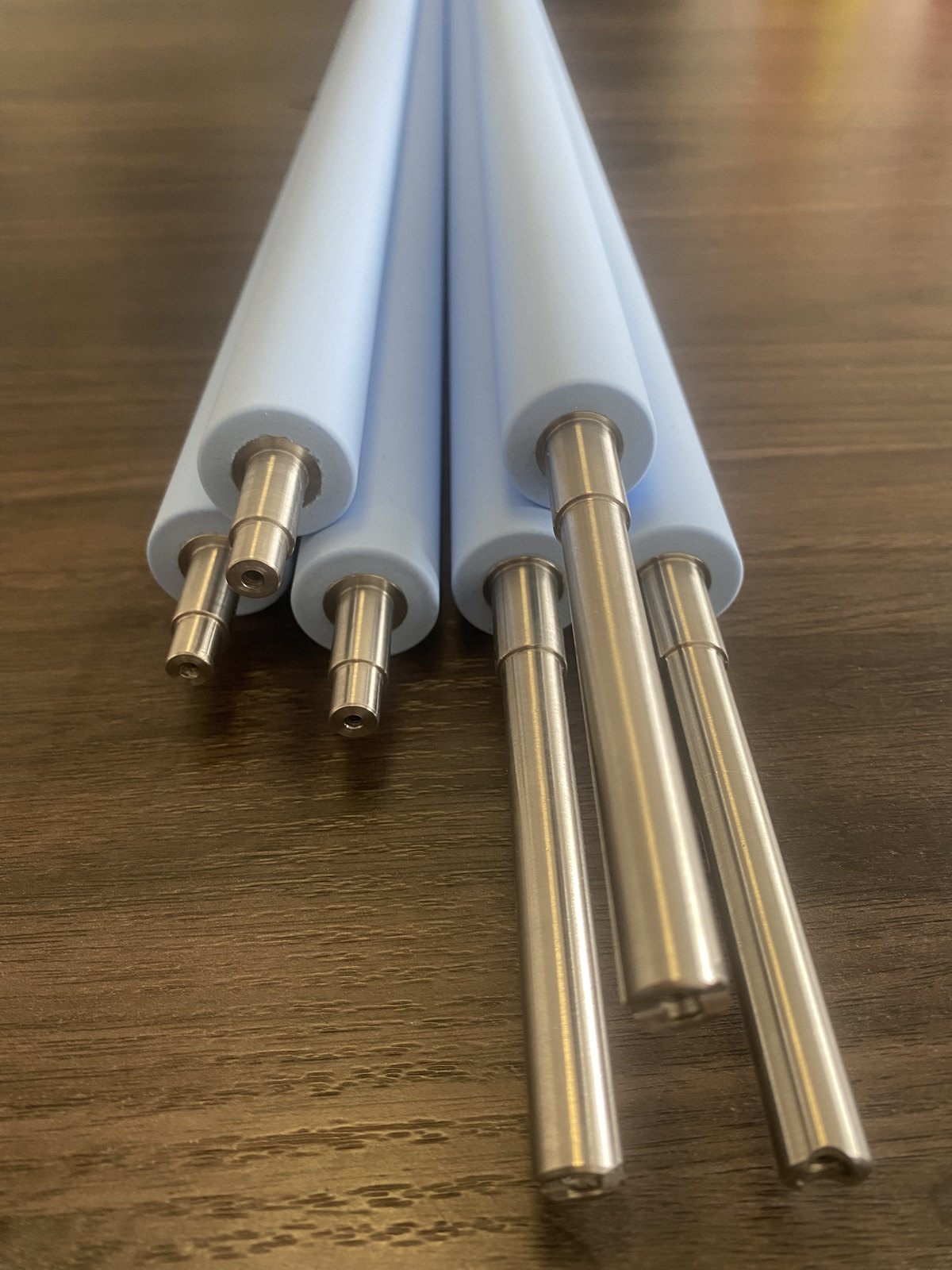
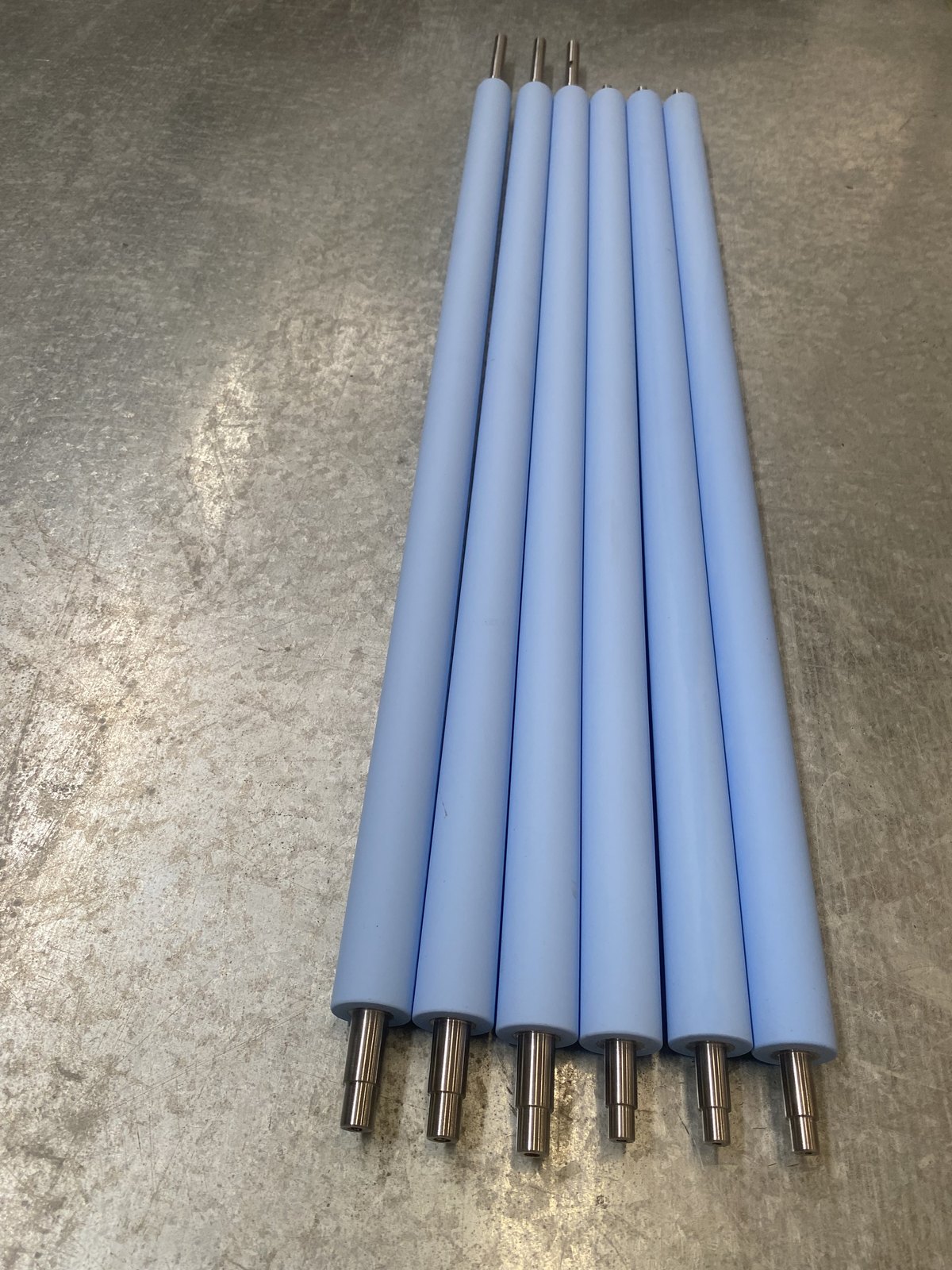
GRFFN anti-stick and anti-static silicone rollers are designed for film, printing, coating, electronics and converting lines where release performance and controlled static dissipation are important. The silicone cover is bonded to a machined metal core or shaft, then ground to the required diameter and surface finish.
Design Features
- Low-adhesion silicone surface for film, adhesive and heated-web handling
- Conductive or static-dissipative formulations selected to the required resistance range
- Custom metal cores, shafts, journals, keyways and bearing seats
- Ground smooth, matte or specified textured finish
- Repair and recoating options subject to core inspection
Technical Parameters
| Cover Material | Anti-static silicone rubber |
|---|---|
| Core / Shaft | Steel, stainless steel or aluminium according to design |
| Outer Diameter | Custom |
| Face Length | Custom; documented standard series up to 1000 mm, larger sizes by engineering review |
| Hardness | Specified according to nip load and web handling |
| Surface Finish | Ground smooth, matte or custom texture |
| Electrical Resistance | Target range must be specified and verified on the finished roller |
| Temperature | Grade-dependent; selected silicone formulations in current product data cover -60 to 350 degrees C, subject to load and speed |
| Balance / Runout | Specified according to roller speed and machine accuracy |
Engineering Information Required
For a new roller, provide an overall drawing, outer diameter, face length, shaft dimensions, hardness, target resistance range, temperature, line speed, nip load and surface requirement. For recoating, provide the existing core material and condition. Electrical resistance should be agreed as a measurable acceptance value rather than described only as anti-static.
Inspection
Recommended finished-roller checks include dimensions, hardness, runout, surface finish, bond condition, balance where required and electrical resistance at agreed test conditions.