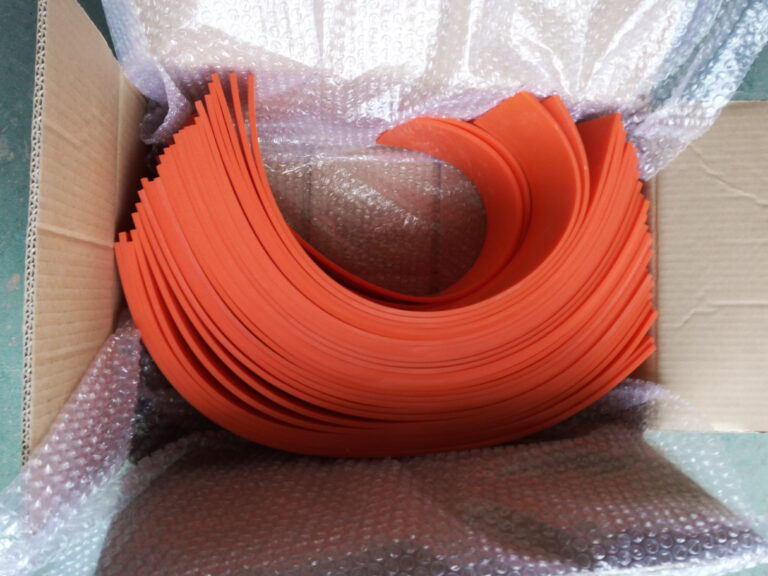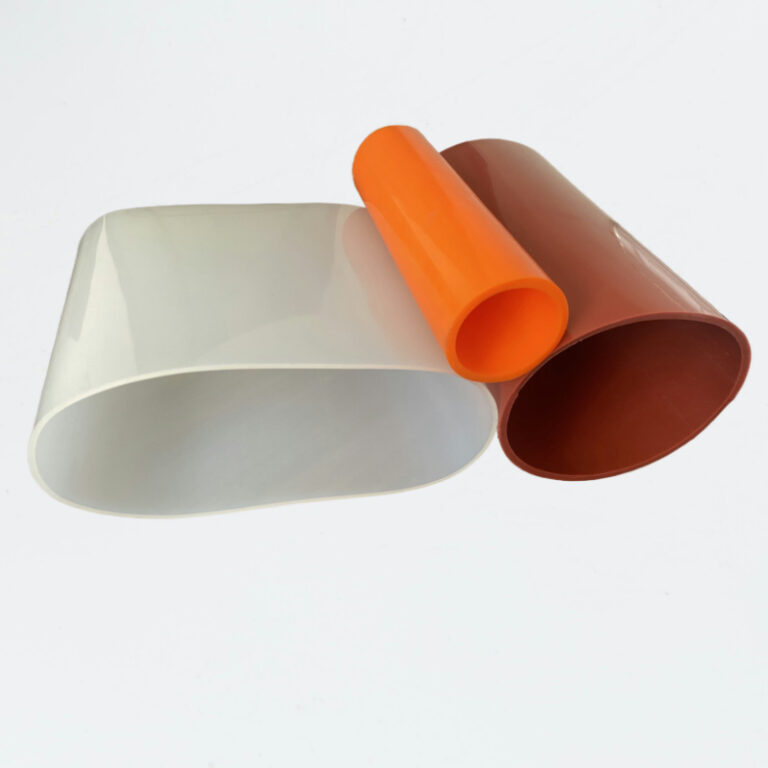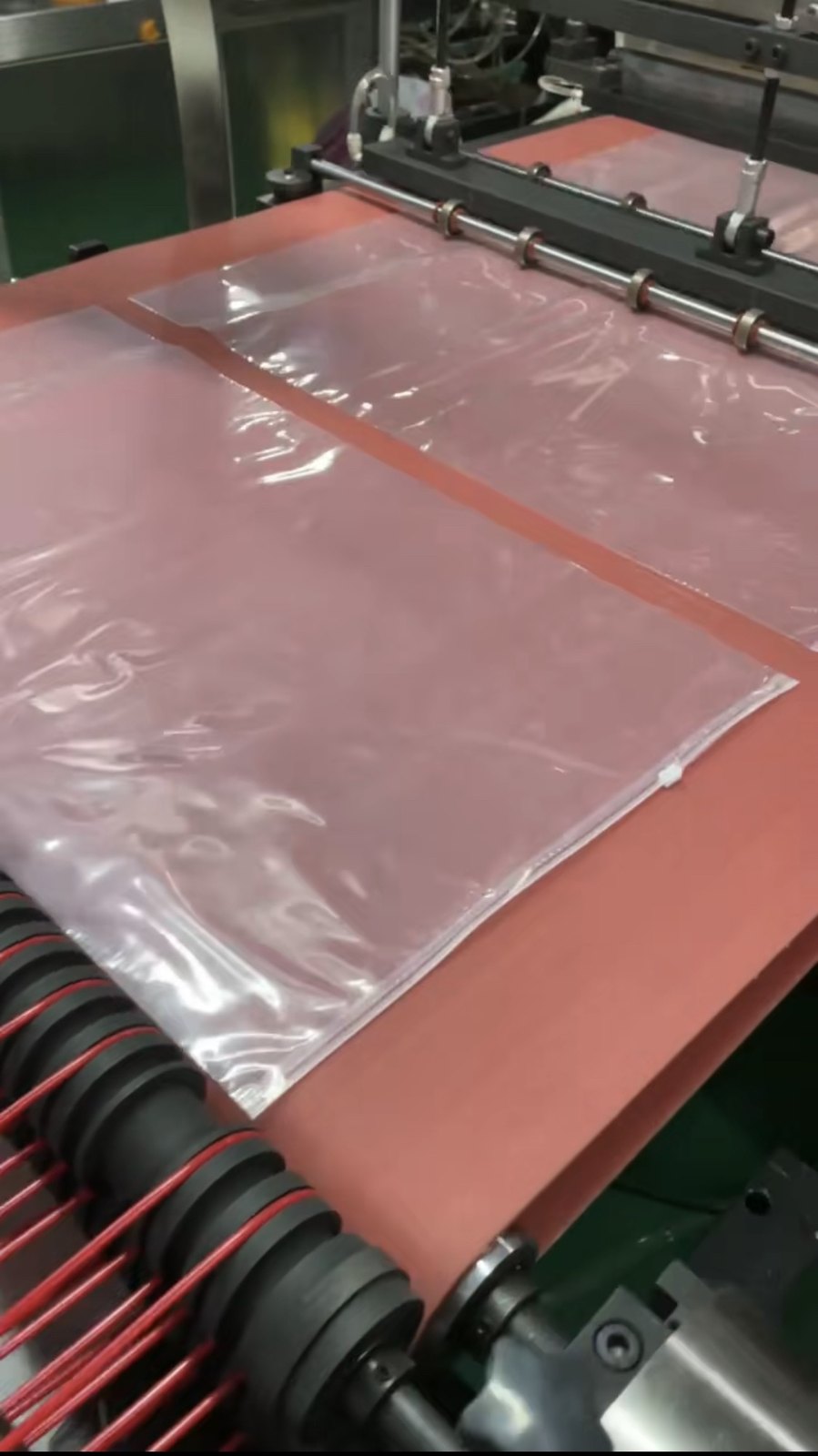
The red silicone conveyor belt shown in this zipper bag-making machine supports film as it moves through positioning, sealing, cooling and discharge sections. Its high-friction surface helps prevent film slipping, while uniform thickness keeps the bag material flat and improves sealing-line accuracy. Silicone also tolerates contact with heated components and releases softened film more cleanly than many conventional rubber surfaces.
For this application, belt dimensions must match the machine exactly. Important parameters include endless circumference, working width, thickness, hardness, surface finish, tensile reinforcement and joint construction. A typical starting specification is 3-5 mm thickness, 50-70 Shore A hardness and continuous temperature resistance of 180-220°C, but final values must be confirmed against machine speed, sealing temperature and belt tension. Fabric-reinforced construction is recommended when low elongation and stable tracking are required.
During operation, the belt should run flat without lateral drift, wrinkles or speed variation. Correct pulley alignment and moderate tension reduce edge wear and stretching. Operators should remove melted film residue regularly and inspect the surface for cuts, glazing and local hardening. When ordering a replacement, provide circumference, width, thickness, color, machine model, operating temperature, speed and photographs of the existing belt. A sample is preferred when tolerances are important.